

Transformation 1
education, gender and inequality
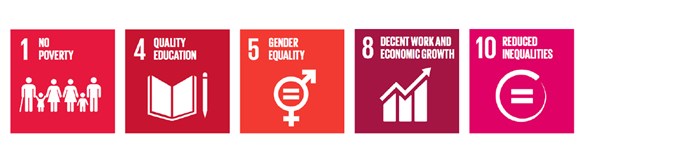
ESFRI Research Infrastructures from all the research fields are strongly supporting the implementation of these SDGs and promote through their organization education, gender equality, and lower inequalities thus contributing to economic growth and elimination of extreme poverty. All ESFRI Research Infrastructures, along with running programs for training students and professional researchers, propose multiple education programmes, very often focused on school-age children, as well as teacher training programs at regional, national, and international levels. ESFRI Research Infrastructures put in their recruitment strategies the objective of gender balance and support all the initiatives which aim at reducing inequalities (e.g. working with refugees and people with disabilities). The Social Science domain has been selected here to illustrate remarkable contributions to this group of SDGs within Transformation 1.
CLARIN ERIC contributes directly to SDGs (4), (5) and (8) with its language resources which provide an easy-to-use infrastructure with digital artefacts and contribute to increasing the number of adults with relevant skills for decent jobs and digital literacy; online availability of these artefacts contributes to equal access, including people with disabilities. CLARIN datasets can be used to develop and evaluate Machine Translation or Automatic Text Simplification technologies, which can contribute to the promotion of secure working environments for migrant workers, and to the promotion of tourism, local culture and products.
The European Social Survey ERIC addresses all of these SDGs (1), (4), (5), (8), (10) not only tapping them individually but allowing cross domain and often across time analysis. ESS includes detailed measurement of highest level of education assessed in relation to a wide variety of other outcomes from health, well-being or economic inequality. ESS allows gender analysis of all of its data and in 2023 will include its first dedicated module on the topic ‘Gender in Contemporary Europe: Rethinking Equality and the Backlash’. The module will measure five dimensions: identity, sexism, experiences, salience and policy instruments.


